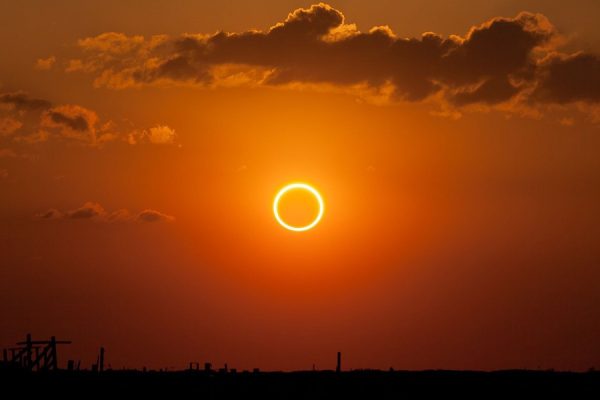
The entire solar eclipse can be visible from a location for around two hours, including the partial phases. But totality, when the Moon completely covers the Sun, is much shorter.
For the 2026 total solar eclipse, totality will last less than two minutes for most people inside the path of totality. Near the point where the eclipse lasts the longest, totality will reach about 2 minutes and 18 seconds.
So, if you’re searching how long will the solar eclipse last, there are really two numbers you need to know: the duration of the entire eclipse and the duration of totality.
How long will the 2026 solar eclipse last?
The total solar eclipse will take place on August 12, 2026, with the path of totality crossing parts of Greenland, Iceland, the North Atlantic, Spain, a small part of Portugal, and northern Russia. A much larger area will see a partial solar eclipse.
At any particular location, the eclipse starts with the partial phase. The Moon gradually moves across the Sun, eventually reaching totality for observers inside the path. After totality ends, the partial phase continues until the Moon completely leaves the Sun.
This means the answer to how long will the solar eclipse last is considerably longer than the answer to how long totality will last.
In many locations, the entire event will take roughly two hours, while the period of complete darkness lasts only around one or two minutes.
How long will totality last in 2026?
The maximum duration of totality during the August 12, 2026 eclipse is approximately 2 minutes and 18.2 seconds.
The point of greatest duration is in the North Atlantic region, close to Iceland. NASA’s eclipse calculations put the greatest-duration point at approximately 65°50’N, 25°29’W.
You should not expect to get 2 minutes and 18 seconds of totality everywhere along the path.
The closer you are to the center line, the longer totality generally lasts. Near the northern or southern edge of the path, totality becomes shorter.
NASA estimates that the path of totality will be about 294 kilometers wide around the point of greatest eclipse.
So if you’re deciding where to watch the eclipse, your exact location matters.
How long will the solar eclipse last in Iceland?
Iceland is one of the most popular places to watch the 2026 total solar eclipse.
In Reykjavík, NASA gives these local times:
- Partial eclipse begins: 4:47 p.m.
- Totality begins: 5:48 p.m.
- Totality ends: 5:49 p.m.
- Partial eclipse ends: 6:47 p.m.
That means the entire eclipse is visible for about two hours, while totality lasts only about one minute in Reykjavík.
This is a good example of why the question how long will the solar eclipse last can be misleading if we don’t distinguish between the whole eclipse and totality.
You can spend two hours watching the eclipse develop, but the moment when the Sun is completely covered is much shorter.
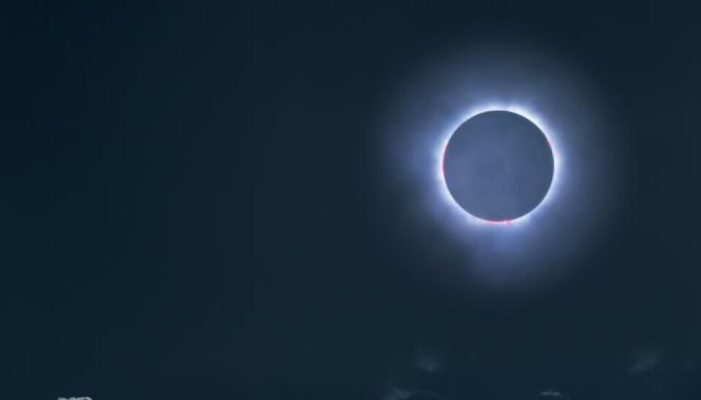
How long will the solar eclipse last in Spain?
Spain is another major viewing destination because the path of totality crosses the country.
The duration varies from one city to another.
In León, for example, NASA lists:
- Partial eclipse begins: 7:32 p.m.
- Totality begins: 8:28 p.m.
- Totality ends: 8:30 p.m.
- Partial eclipse ends: 9:22 p.m.
That gives León about two minutes of totality and almost two hours for the complete eclipse.
In Zaragoza, totality is expected from about 8:29 p.m. to 8:30 p.m., while the partial phase continues until approximately 9:07 p.m.
In Valencia, totality will be even shorter, from approximately 8:32 p.m. to 8:33 p.m., with the partial eclipse continuing until around 9:01 p.m.
So if you’re asking how long will the solar eclipse last in Spain, the answer depends heavily on the city.
Why does the duration change depending on location?
The Moon’s shadow doesn’t cover the same place for the same amount of time.
The eclipse’s path has a central line where totality lasts the longest. As you move toward either edge of the path, the duration of totality decreases.
This is why two people in the same country can have noticeably different experiences.
Someone near the center line may get close to two minutes of totality, while someone closer to the edge may experience totality for only a few seconds.
The NASA eclipse maps show both the path limits and the central line, allowing observers to compare the expected duration at different locations.
Is 2 minutes and 18 seconds the longest the eclipse will last?
For totality during the 2026 eclipse, yes. The maximum predicted duration is about 2 minutes and 18 seconds.
It is worth pointing out that this is not the duration of the entire solar eclipse. It is the maximum duration of the total phase.
The complete eclipse lasts much longer because the partial phases happen before and after totality.
NASA’s eclipse data lists the August 12, 2026 event as a total solar eclipse with a central duration of approximately 2 minutes and 18 seconds.
How long will the solar eclipse last from other locations?
Not everyone will see a total solar eclipse on August 12.
Large parts of Europe, North America and northern Africa will see a partial solar eclipse, but the Moon will not completely cover the Sun from those locations.
For example, NASA lists the following local times for some cities:
| City | Eclipse begins | Maximum | Eclipse ends |
|---|---|---|---|
| Madrid | 7:36 p.m. | 8:32 p.m. | 9:16 p.m. |
| Barcelona | 7:35 p.m. | 8:29 p.m. | 8:54 p.m. |
| London | 6:17 p.m. | 7:13 p.m. | 8:06 p.m. |
| Paris | 7:22 p.m. | 8:17 p.m. | 9:09 p.m. |
| New York | 1:07 p.m. | 1:54 p.m. | 2:38 p.m. |
These locations will experience the eclipse for roughly one to two hours, but they will not experience totality.
So, how long will the solar eclipse last?
If you just want the answer without all the details:
- Date: August 12, 2026
- Entire eclipse: roughly two hours at many locations
- Totality: usually less than two minutes
- Longest totality: about 2 minutes and 18 seconds
- Best-known viewing areas: Greenland, Iceland, northern Russia, the North Atlantic, Spain and a small part of Portugal
The most important distinction is between the entire solar eclipse and totality.
So, if you search how long will the solar eclipse last, don’t expect the answer to be simply “two minutes.” The complete event can last around two hours, but the most spectacular part — when the Moon completely covers the Sun — will be over in roughly one to two minutes.
For the August 12, 2026 eclipse, the lucky observers near the point of greatest duration will get just over two minutes of totality. That’s the part people traveling to the path of totality are really waiting for.
Our Services